Problem Space 5 of 7 · Lifecycle checkpoints
Did we start where we think? Did the repair actually restore structure?
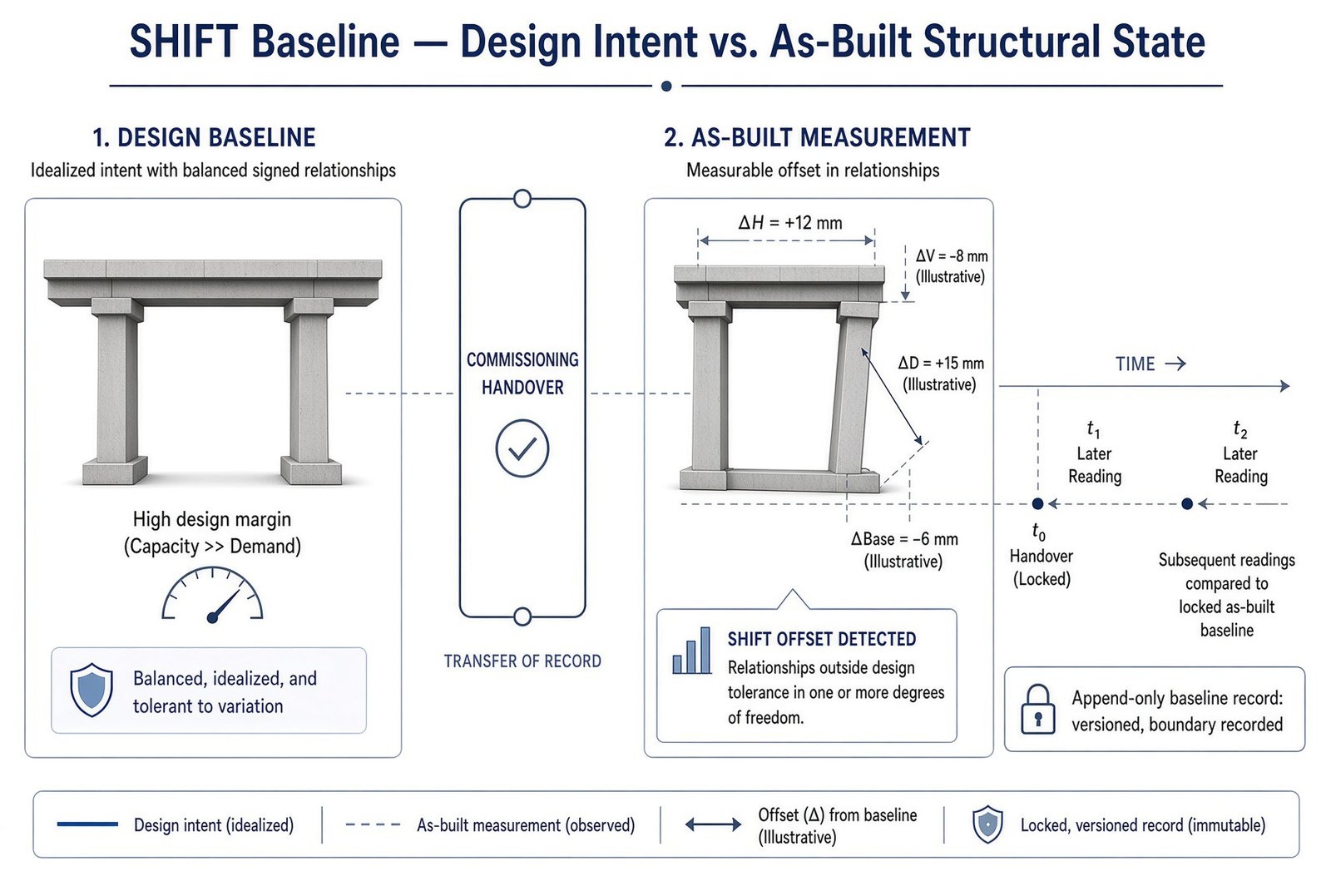
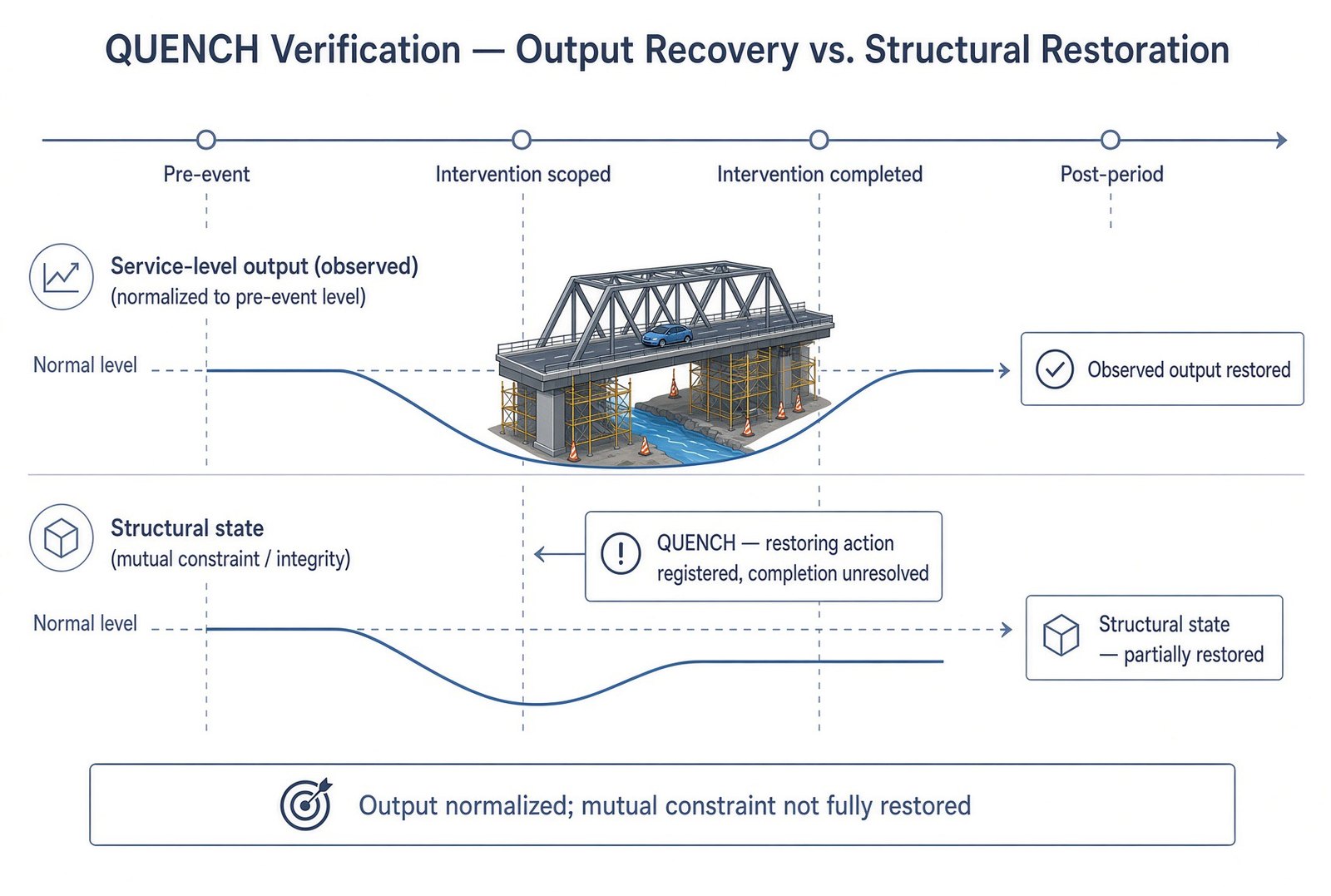
Two moments anchor a system's record. At handover, the as-built structural state is locked as a versioned baseline, so later readings are compared to what was built, not to design intent. After a repair, the instrument checks whether structural state was actually restored, or only the output.
You'll recognize this if the as-built record is still the design drawings, or a repair closed the work order but the system never quite behaved the same.
What you receive
A locked as-built baseline, and a before-and-after structural reading around each repair.
When to use it
At commissioning or acquisition, and after any significant repair or intervention.
What it starts from
Handover and maintenance records, and dated records before and after the work.
One Question Challenge
Can the answer to one question begin a transformation for your organization?
Bring us your version of this question. Submit one well-formed question about the relationships holding your system together. If the structural signal is present, you will know it; if not, the engagement stops. No data leaves your environment. No implementation required. No commitment beyond the question itself.
Take the ChallengeThe usual starting point is the One Question Challenge, or a bounded Structural Integrity Scan from existing records.
Figures are illustrative. SCFL-Quad is patent pending. Upstream Coherence Measurement Stratum (UCMS).